Find Used Cars for Sale: 2014 hyundai

Hot

Showing posts with label 2014 hyundai. Show all posts

Thursday, November 27, 2014

Redesigned Hyundai Sonata Wins CARS.COM, USA TODAY

8:02 AM 0
Recently the redesigned Hyundai Sonata won an award over in the United States. The new Sonata, which is not available in Malaysia at the moment won the Motorweek Midsize Sedan Challenge. The new Sonata held up against 9 other brands and came up tops after some expert and car shopper testing.


This is the seventh generation Sonata. We still get the sixth but with the sale of the European influenced i40, I doubt that Malaysia will get this seventh generation car. But it shouldn't be too much of a worry as the Hyundai i40 is a very good drive too. Better to have European influence in my opinion.
Hyundai i40 Wagon ......
vs the Hyundai Sonata

PRESS RELEASE

Redesigned Hyundai Sonata Wins CARS.COM, USA TODAY, Motorweek Midsize Sedan Challenge

- Model Ranked No. 1 among Popular Midsize Sedans in Expert and Motorweek Midsize Sedan Challenge and Car Shopper Evaluations

The 2015 Hyundai Sonata was named the winner of the Midsize Sedan Challenge,

conducted by experts from Cars.com, USA Today, MotorWeek and a family in

the market for a new midsize sedan. The Challenge pitted 10 of the most popular

midsize sedans against each other in a series of expert and car shopper testing to

determine which model was the best in class.


“Among the midsize sedans available on the market today, the 2015 Sonata rose

to the top as the winner of the Midsize Sedan Challenge for its design, features,

comfort, fuel efficiency and overall handling,” said Mike O’Brien, vice president of

corporate and product planning, Hyundai Motor America. “The Challenge also took

into account the opinions of a family, which pays tribute to the redesigned Sonata’s

ability to address the wants and needs of real customers.”


The Midsize Sedan Challenge included 180 miles of driving on varying roads to test

real-world fuel economy, one day of round-robin testing where each expert evaluated

each car’s ride, handling, acceleration, roominess, comfort and features, and testing

by a family in the market for a new midsize sedan, who evaluated each car for the

same categories as the experts, from a family point-of-view.


“Many shoppers have come to recognize the Hyundai Sonata as a value-packed

option among midsize sedans, and the 2015 redesign raises the Sonata even higher

- and above its many competitors,” said Joe Wiesenfelder, Cars.com executive

editor. “The Sonata does many things well, has loads of space, impressive features,

driving refinement and offers plenty of value. The Sonata’s generous warranty is also

a real value lacking in many of the other competitors.”

About Cars.com
Cars.com, a Gannett company, is an award-recognized online destination for car shoppers

that offers information from experts and consumers to help buyers formulate opinions on what

to buy, where to buy and how much to pay for a car. Cars.com offers thousands of new and

used vehicle listings, expert and consumer reviews, side-by-side comparison and build and

price tools, photo galleries, videos, unbiased editorial content and many other resources.

Cars.com puts millions of car buyers in control of their shopping process with the information

they need to make stress-free buying decisions.


About Hyundai Motor America
Hyundai Motor America, headquartered in Fountain Valley, Calif., is a subsidiary of Hyundai

Motor Co. of Korea. Hyundai vehicles are distributed throughout the United States by Hyundai

Motor America and are sold and serviced through more than 820 dealerships nationwide. All

new Hyundai vehicles sold in the U.S. are covered by the Hyundai Assurance program, which

includes the 5-year/60,000-mile fully transferable new vehicle limited warranty, Hyundai’s

10-year/100,000-mile powertrain limited warranty and five years of complimentary Roadside

Assistance. Hyundai Blue Link Connected Care provides owners of Hyundai models

equipped with the Blue Link telematics system with proactive safety and car care services

complimentary for one year with enrollment. These services include Automatic Collision

Notification, Enhanced Roadside Assistance, Vehicle Diagnostic Alert, Monthly Vehicle

Health Report and in-vehicle service scheduling.


About Hyundai-Sime Darby Motors Sdn Bhd
Hyundai-Sime Darby Motors Sdn Bhd (HSDM) is a subsidiary of Sime Darby Motors. HSDM

is now the sole distributor and exclusive importer of all Hyundai completely built-up and

locally assembled vehicles and related spare parts.


HSDM’s complete car line-up includes the i10, Elantra, Veloster, Sonata, i40, Tucson, i30,

Santa Fe, and Grand Starex Royale.
Read More

Thursday, June 19, 2014

Hyundai Snares Most JD Power Initial Quality Awards In Its History

6:46 AM 0
J.D. Power presented three Hyundai vehicles - 2014 Genesis, 2014 Elantra and 2014 Accent - their highest award for initial quality in their respective segments. Hyundai ranked fourth overall in initial quality, climbing six spots from last year, and was the highest-ranked non-premium brand. In total, Hyundai had six vehicles in the Top Three positions in their segments, including two second place finishes for Santa Fe and Sonata and a third-place finish for Equus. This year’s results mark the third time Hyundai has been the highest-ranked non-premium brand in the past 10 years, and the third time it finished among the Top Four brands overall.


For a second consecutive year, Porsche ranks highest in initial quality among all nameplates, with a score of 74 Problems Per 100. Following Porsche in the rankings are Jaguar (87 PP100), Lexus (92 PP100) and Hyundai (94 PP100). - See more at: http://www.jdpower.com/press-releases/2014-us-initial-quality-study-iqs#sthash.cPEEXJSj.dpuf

Note that this is in the Quality Rating segment which covers the initial 90 days period, there is also the Dependability Rating which covers the first 36 months or 3 years of ownership. Hyundai slips a little to over the industry average later on. See more at http://autos.jdpower.com/ratings/2014-Vehicle-Dependability-Study-Press-Release.htm

HYUNDAI PRESS RELEASE
− Genesis, Elantra and Accent Ranked Highest in 2014 J.D. Power Initial Quality

Study – Hyundai Highest Ranked Non-Premium Brand

J.D. Power today presented three Hyundai vehicles - 2014 Genesis, 2014 Elantra

and 2014 Accent - their highest award for initial quality in their respective segments.

Hyundai ranked fourth overall in initial quality, climbing six spots from last year, and

was the highest-ranked non-premium brand. In total, Hyundai had six vehicles in the

Top Three positions in their segments, including two second place finishes for Santa

Fe and Sonata and a third-place finish for Equus. This year’s results mark the third

time Hyundai has been the highest-ranked non-premium brand in the past 10 years,

and the third time it finished among the Top Four brands overall.

The award comes from the J.D. Power 2014 U.S. Initial Quality StudySM (IQS). Now

 consecutive year, IQS is the industry benchmark for new-vehicle quality,

in its 28th

measured at 90 days of ownership.

“Receiving IQS awards in multiple vehicle segments acknowledges Hyundai’s

commitment to quality and customer satisfaction across our entire product lineup, not

just our luxury vehicles,” said Dave Zuchowski, president and CEO, Hyundai Motor

America. “Today’s awards are a true reflection of the hard work and dedication of all

the Hyundai team members here, in Korea and Montgomery, Alabama.”

The IQS serves as the industry benchmark for new-vehicle quality and has proven to

be an excellent predictor of long-term reliability, which may significantly impact new-
vehicle purchase decisions. The focus of the study is model-level performance and

comparison of individual models to similar models in respective segments, which

helps manufacturers worldwide to design and produce higher-quality vehicles.

In addition to victories in three vehicle segments, the Hyundai brand substantially

reduced problems per 100 vehicles and finished fourth overall, gaining six rank

positions compared with 2013. The Hyundai overall score was 94 problems per 100

vehicles, 12 fewer than last year and 22 fewer problems than the industry average

which actually deteriorated three problems per 100 compared with 2013. Also,

Genesis scored back-to-back segment while Accent, with a mere 65 problems-per-

100, was the second highest performing vehicle in the study.

About The J.D. Power And Associates 2014 U.S. Initial Quality Study

The 2014 U.S. Initial Quality Study is based on responses from more than 86,118 purchasers

and lessees of new 2014 model-year cars, trucks and multi-activity vehicles surveyed after

90 days of ownership. The study is based on a 233-question battery designed to provide

manufacturers with information to facilitate identification of problems and drive product

improvement. The study was fielded between February and May 2014. The study is used

by manufacturers worldwide to improve quality and by consumers to help them make more

informed purchasing decisions. Throughout the years, initial quality has been shown to be a

leading indicator of long-term durability, which directly impacts customer loyalty and purchase

decisions.

About Hyundai Motor America

Hyundai Motor America, headquartered in Fountain Valley, Calif., is a subsidiary of Hyundai

Motor Co. of Korea. Hyundai vehicles are distributed throughout the United States by Hyundai

Motor America and are sold and serviced through more than 820 dealerships nationwide.

All Hyundai vehicles sold in the U.S. are covered by the Hyundai Assurance program, which

includes the 5-year/60,000-mile fully transferable new vehicle limited warranty, Hyundai’s

10-year/100,000-mile powertrain limited warranty and five years of complimentary Roadside

Assistance. Hyundai Blue Link Connected Care provides owners of Hyundai models

equipped with the Blue Link telematics system with proactive safety and car care services

complimentary for one year with enrollment. These services include Automatic Collision

Notification, Enhanced Roadside Assistance, Vehicle Diagnostic Alert, Monthly Vehicle

Health Report and in-vehicle service scheduling.

About Hyundai Motor Company

Established in 1967, Hyundai Motor Company is committed to becoming a lifetime partner in

automobiles and beyond. The company, which leads the Hyundai Motor Group, an innovative

business structure capable of circulating resources from molten iron to finished cars, offers

top-quality best-sellers such as Elantra, Sonata and Genesis. Hyundai Motor has seven

manufacturing bases and seven design & technical centers outside of South Korea and in

2013, sold 4.73 million vehicles globally. With almost 100,000 employees worldwide, Hyundai

Motor continues to enhance its product line-up with localized models and strives to strengthen

its leadership in clean technology, starting with the world’s first mass-produced hydrogen-
powered vehicle, ix35 Fuel Cell.

About Hyundai-Sime Darby Motors Sdn Bhd

Hyundai-Sime Darby Motors Sdn Bhd (HSDM) is a subsidiary of Sime Darby Motors. HSDM

is now the sole distributor and exclusive importer of all Hyundai completely built-up and

locally assembled vehicles and related spare parts.

HSDM’s complete car line-up includes the i10, Elantra, Veloster, Sonata, i40, Tucson, i30,

Santa Fe, and Grand Starex Royale.
Read More

Sunday, April 20, 2014

Test Drive: Hyundai i40 Tourer Sports 2.0 GDI Automatic - This could be the best D Segment Wagon on sale today.

9:20 AM 0
Hyundai cars have come a looooong way since their introduction to this country. I remember when the first Hyundais made their way into our market in the early 1990s and during that time, there were not many takers of the brand. At a time where Proton had cars on waiting lists. Honda and Toyota were cars that people bought and where loan repayment periods were less than five years almost everyone bought what they could really afford or really want. So people went and bought the three cars mentioned above, as well as some Nissans by the dozens. Hyundai was still an afterthought. People did not see them as real quality stuff. Even I wasn't bothered with this Korean upstart.

But it wasn't the general public's fault. The earliest Hyundais were horrid creatures. They had something called the Scoupe, which was short for Sporty Coupe. It may have been called something else that starts with an S and it sure as hell wasn't sporty. It wasn't even remotely fast with the 1.5liter Mitsubishi engine that was installed in it. They also made something called the Sonata for the full sized family car category. It was categorically just as bad as the Scoupe as it was dull to look at, had horrible plastics and somehow not as enjoyable behind the wheel. As a means of transport, the Sonata of the early 1990s was fine. But that being said, so was a horse cart.

However, I must state for the record that times have changed. It has been quite ingrained in my sometimes pessimistic mind that the Koreans have not really caught up with the Joneses; the Toyota, Honda, Nissan and especially the continentals like Audi, BMW, Mercedes Benz or even Volvo for that matter. How wrong have I been. The Hyundai i40 Tourer I drove recently is a fabulous, fabulous animal.


The Design & Equipment
The Hyundai i40 Tourer (as well as the sedan) was designed specifically for the European market and somehow Hyundai Malaysia has chosen to sell it with their other D segment or full sized car, the Sonata. The car gets Hyundai's current design language, the 'fluidic scuplture' and it this station wagon or shall I say, Shooting Brake form looks pretty good. However, the model tested was the full monty i40 Tourer Sport 2.0 GDI Auto and in this 'sport' specification comes with a bodykit (as well as a roof and bicycle rack) whilst aggressive with its front splitter, side skirts and rear diffuser complete with twin squarish tailpipes, looks a little heavy arsed.

I do believe the standard i40 Tourer looks better and it (aside from the bodykit and roof rack with adds close to RM5,000) gets the same equipment as this Tourer Sport. The i40 Tourer comes in with everything from cornering lights, standard day–time running lights with Xenon headlamps and TFT (Thin Film Transistor) LCD supervision instrument cluster, electric parking brake with an automatic hold function, Rear-Seat Video Entertainment Screens (optional for Sedan), and 10-way driver and passenger adjustable power seat.


It also features Electronic Stability Programme (ESP), Anti-lock Brake System (ABS), Hillstart Assist Control (HAC - the AutoHold button above beside the electronic park brake and all round park sensor which you can view from the instrument cluster screen) , Brake Assist System, Vehicle Stability Management (VSM) and Emergency Stop Signal and 9 airbags, which includes an airbag for each the driver and passengers, two side curtain airbags and four thorax airbags at the outboard seating positions with an additional airbag for the driver’s knees and legs.


The Engine, Transmission & other specification
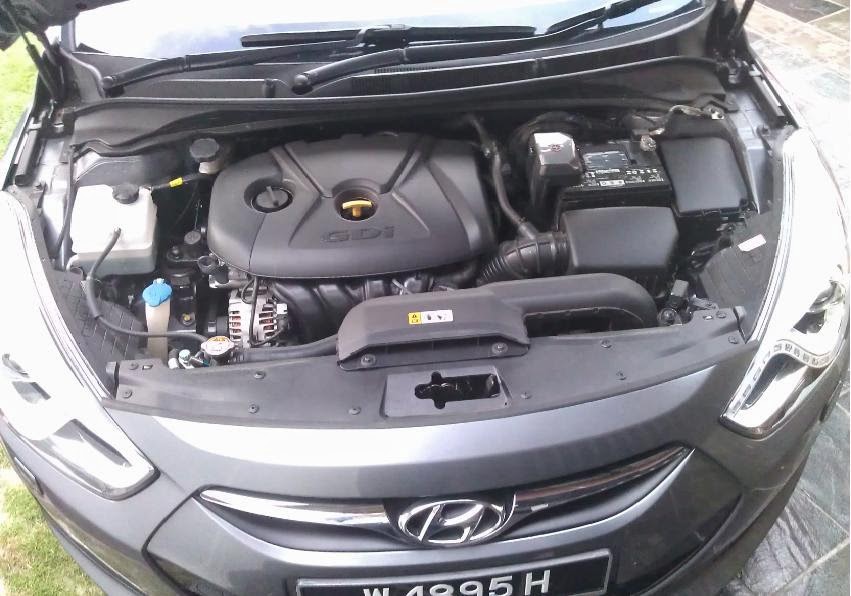
The i40 Tourer Sport comes with a Hyundai's 2-litre NU GDI (Gasoline Direct Injection) engine. The 1,999 cc engine makes 177ps and 213nm of torque which powers the front wheels via a six-speed automatic gearbox. The strange thing is that the Tourer actually makes 1ps and 1nm less than the sedan. Which is quite strange.

The i40 Tourer has a wheelbase measuring 2770cm and is very roomy. Both at the front and at the rear. It is quite deceptively small in looks but when you get close, and then step in it you then realise that the i40 is indeed a large car. The i40 Tourer seats can also be folded over for more cargo space of up to 1,719 litres and the tailgate gets a fully electrically powered one which allows one touch opening and closing – like a higher up the line Continental wagon. Quite a feat at this price range. And with all that sophistication, it still allows you to fill it with tons of shopping.

Driving the Darn Thing

When you get into the i40 Tourer Sports you first notice the now common slightly futuristic dashboard design of the car. The second thing you notice is that the interior is nicely put together with a lot of soft touch plastics, leather and bits of polished bits too. You notice that the material used in the cabin is good to the touch and then you would notice that the switchgear, knobs, steering are all pleasant to hold too. Aside from looking its part everything is nicely weighted and tactile to the touch. Then you notice the European type light switch on the dashboard instead of on stalks and you feel that this isn't the usual run of the mill Korean car you've sitting inside. If you want a comparison, it is better than what you'd get in the Hyundai Sonata. Miles better.

The only issues that I personally have with the i40's dashboard layout are the spit vents and that some secondary controls are located closer to the passenger than the driver. But those are minor quibbles. As is the fact that I do wish Hyundai could try make a less fashion forward looking dashboard (and less blue lighting) and be a little more conservative. But that's just my opinion. The rest of the interior is pretty good and closer to continental levels of finishing. Even doing it better than all of the Japanese competitors in this price range. Yes. The interior material quality is that good and the seating position is spot on for spirited driving.

As with most high end Hyundais you start it up with the key located in your pocket by pressing the start button. Everything lights up to a nice blue (which you can adjust the meter cluster brightness to suit). Even the audio navigation system screen looks a little better than the ones from a class down (the Tucson and the Elantra).

Now on the move you will first notice that the car is well insulated from road noise and engine noise. At speed however you notice that there it some wind noise from the roof and the cause of this is the optional roof and bicycle rack. At around 100kmh and above it will whistle for you. And you do not want that as the car is actually bloody quiet at cruising speeds.


The ride is also sublime with the right amount of damping and sportiness. It isn't stupidly springy and soft like a Camry nor is it hard like the Honda Accord or the hardest of the lot, the Mazda 6. It has that continental flavour to it and even a few friends say that it rides somewhat like an Audi A4. There is no secondary ride issues to and going over potholed roads is handled with the shocks working but the occupants not feeling too much jarring or even extra noises from the struts or mounts. The i40 Tourer has the NVH portion licked if not for the roof rack. This is starting to be good.

Now the handling of this car is also quite good. The steering feels good too, with some feel and nicely weighted too. You can predictably throw this 1,560kg+ wagon into corners hard and the car will stay planted. It is still very nose led but I would prefer this in a longish front wheel drive wagon. It is still throttle adjustable if the road is wide enough for you to do so and it will also take sweeping corners with ease. This is one car which is very, very easy to do long distance cruise on all sorts of roads. You can tell from the in-car vid that I have posted below that belting it on a tight road does not require much effort. In fact this is one of the cars where I have driven for more than a few hours over windy roads as well as ttraffic and not felt exhausted after the drive. The chassis is predictable and good. So good that this is another of those cars that could easily handle another 50 more horsepower in order to make things even more fun.

The brakes are good. It should be able to handle more power too although the initial bite isn't as strong as I would have liked. It is easy to modulate at speed and able to slow down the car adequately well. The ABS and traction control (in the dry) isn't intrusive as it should be for a car with a sporty setup.

And speaking of power the 2.0liter Nu direct injection engine is a smooth operator. It is not strained even in its current state of tune (177ps/213nm) and revs to the its close to 7,000rpm redline easily and smoothly with no significant change in the engine note from 4000rpm to the shift point slightly below the redline. As with all direct injection engines, the high compression makes it feel like a tuned performance engine. It does not feel lethargic and quite able to pull the i40 in wagon form quite well. Of course, it would feel better in the slightly lighter (and 1hp, 1Nm more powerful – as if that will make a difference) i40 sedan. I do believe in this state of tune the Nu GDI still has more to show but Hyundai has put a cap on it for the sake of reliability. This engine is actually one of the better 2.0liter engines that has reached our shores, if it is not the best. 

Most of the Japanese offerings here still forsake Direct Injection (and forced induction) and make less power (around 150-165hp and around 190-200nm torque). I think this is a big mistake. This engine is one of the best normally aspirated lumps around as you have to note that even if you compared the horsepower figures to the VW Passat 1.8TSI sold here it makes more horses (177ps against 160ps) but slightly less torque (213Nm against 250Nm). Compare it with Mazda's 2.0liter engine and you get 177ps against 155ps and 213Nm against 200Nm. Of course, when you compare it to the Mazda 6 Grand Touring wagon, which has a 2.5liter it loses out as that has 185hp and 250Nm torque. But you do save on road tax.

As for performance figures, the i40 Tourer Sports did the 0-100kmh dash in about 10.5 seconds. Yes, it isn't rapid as expected but do remember that it has to lug over 1560kg (including this chubby driver). It will cruise on the highways at over 180kmh easily but its sweet spot seems to be around 140-150kmh where you still don't work up a sweat driving it. But again, get rid of the roof rack when you want to do so as it whistles, whistles and whistles.

Conclusion


So aside from the roof rack making some noise, are there any other issues with the car? No. Not really. This really surprised me. I wished it had a bit more power or that it was slightly lighter (but I could get the sedan for this) but this is a 2.0liter category car, so you cannot ask for much more than this. However I must state that the i40 Tourer's fuel consumption may be a little average in its class– 12.3ltrs/100km was what I got. This is a pretty average figure which I believe boils down to it having extra weight compared to the sedan.

When I was handed the keys to the i40 Tourer Sport I had my reservations about this car. After driving the darn thing I have to say that this is one of the better 2.0liter sedans/wagons out there on sale today. In its tourer/wagon format I do believe that with its reliability, after sales warranty and value added services package, its performance and its practicality.

The Hyundai i40 Tourer Sport is priced at RM179,897.50. If you compare this wagon with other wagons on sale in Malaysia you will find that this has the most value. The Mazda 6 2.5 Touring comes in at RM193,849.50 OTR and a 2.5liter road tax to boot. There is the Subaru Legacy 2.5 Wagon but that sells for over RM220,000 so it isn't good value for money at all.

The Peugeot 508 SW saves on road tax as it has a 1.6turbocharged engine and is similar in price – 179,888.00 BUT, note the big BUT here, I suggest not really going for this i40 Tourer Sport variant unless you like the bodykit a whole lot and you like bicycling and get the normal i40 Tourer at RM174,097.50. To me it looks less heavy arsed and gets rid of that bicycle rack. Or you could sell off the bicyce rack for a thousand five hundred Ringgit and keep the bodykit and be cheaper than the Pug. Oh, it may be actually cheaper to maintain in the long run compared to the Pug too.

So there you have it. The Hyundai i40 Tourer Sports 2.0GDI. A fabulous station wagon for its price. One I believe to be the best bang for buck in this smallish category. In fact, after driving this for a while I must say that the i40 sedan (RM155,836.50 OTR) could be one of the best in its class. Kimchi has overtaken Sushi in terms of overall execution in the full sized sedan (D segment) category.


Hyundai i40 Tourer Sport Nu 2.0 GDI AT Specifications
Base Price: RM179,897.50 (with insurance).

It also comes with a 5 year / 300,000km extended warranty AND 1 year Hyundai Leader Card membership. Members get to enjoy premium services and VIP privileges such as the luxury concierge services and personalised medical assistance.

Body:5 door Station Wagon
Mechanical Orientation: Front Wheel Drive
Engine:4 cylinder 16 valve fuel injected 2.0-litre normally aspirated direct injection
Power: 177PS
Torque: 213 NM
Transmission:6 speed automatic with Tiptronic
Weight: approximately 1,560kg
0-100 km/h: 10.5 seconds (tested)
Top Speed: 185+kmh (tested)
Fuel Consumption: I got an average of around 12.3ltr/100km

For: Massively long equipment list, interior space, interior quality – fit and finish, comfy seats, quiet interior (more so if not for the bicycle rack), entertaining handling, great ride and handing balance, good performance from the engine, styling, good value for money due to the equipment given, feels quite Continental in its layout, ride and overall feel (think Ford Mondeo and a little bit of VW/Audi), best bang in its class (D segment station wagon)


Against: a little pricey (for some), the sedan's cheaper and may give you the same thrills or more, average fuel economy, badge snobbery for some Malaysians, wind noise due to optional bicycle rack, audio system good but may need some 'Infinity' tuning like in the Kia Optima, I'd buy the sedan one or the normal tourer (pictured below) over this

Do note that the wheels of the Tourer Sports will look like the ones on this Tourer (without bodykit and roof rack)


Read More

Wednesday, April 16, 2014

All-new Hyundai Sonata launched for the 2015 model year over at the 2014 New York Motor Show

9:49 PM 0

 Hyundai has released the all-new Sonata for the 2015 model year. This is a whole new model folks. Note that its 'fluidic sculpture' design is in place but isn't so fluidic for this model. It looks slightly more conservative than the previous model and it also looks more conservative if you compare it with the European specced and inspired Hyundai I40. For your information, the Sonata is sold over in America but the i40 is sold in Europe. Maybe this is why there is a difference in styling. A more conservative looking, Ford Mondeo-ish looking car for America less curves compared to the i40. 
Here in Malaysia we have the Hyundai i40 on sale as well as the Hyundai Sonata. The Sonata being the entry level D segment car here for Hyundai whereas the i40 is the flagship sedan for Malaysia. I personally prefer the shape of the i40 over both the old and this upcoming 2015 Sonata. BUT that being said, both Hyundai i40 and the new Sonata showcases some confidence in the Korean car manufacturer. I wonder if this new Sonata will be brought into Malaysia considering it is now closer in specs to the i40 rather than before. And will they ever bring in the Turbocharged GDI engine for us enthusiasts to have fun with? Time will tell. 

PRESS RELEASE.
2015 HYUNDAI SONATA BLENDS CONFIDENCE-INSPIRING DRIVING DYNAMICS AND PREMIUM DESIGN
Sonata Evolves with Fluidic Sculpture 2.0 Design Language and Class-Above Features
NEW YORK, April 16, 2014 – Hyundai today introduced its all-new seventh-generation 2015 Sonata at the New York International Auto Show. Following the incredible success of the outgoing Sonata, the all-new generation offers a more refined look through a new Fluidic Sculpture 2.0 design language, stiffer body structure, better ride quality, reduced noise, vibration and harshness and advanced safety and convenience features. Sonata truly democratizes the premium design and convenient technology of the Genesis sedan for the mid-size class. The new 2015 Hyundai Sonata will be built at the Hyundai Motor Manufacturing Alabama plant in Montgomery, Ala. and go on sale early this summer.
EXTERIOR DESIGN
The 2011 Sonata raised the bar for design in the mid-size sedan segment when it was introduced in 2009. Consumers noticed the groundbreaking design and so did the competition. Sonata’s design matures for the 2015 model year with energetic and crisp lines complimented by smooth and subtle surfaces. Fluidic Sculpture 2.0 is a confident evolution of the original fluidic sculpture design language that perfectly expresses Sonata’s premium look and excellent value.
A larger, more refined grille with a wide air intake defines the face of the 2015 Sonata. Simple, harmonious lines adorn the exterior while hinting at the improved dynamic performance and human-machine connection Sonata provides. Taut, horizontal rocker panels reflect the chassis’ increased stability and surefootedness while the signature Sonata beltline is now stretched tight to accentuate the sedan’s strength. The coupe-like roofline remains, but it is balanced by a larger window graphic that emphasizes the roomier interior. Horizontal lines in the rear underscore Sonata’s width and give the car a planted look. This purposeful shape achieves a remarkable drag coefficient of just 0.27, lower than any non-hybrid in the mid-size sedan class.
Shoppers looking for a traditional design will appreciate the 2015 Sonata SE’s exterior styling that includes standard LED daytime running lights, 16-inch alloy wheels, a rear lip spoiler and chrome surround for the day light opening. Sonata Limited adds rocker panel extensions and dual exhaust for a premium look.
Sonata Sport features a more aggressive front grille and bumper, side rocker extensions and side chrome molding. Sport models powered by the 2.4-liter four-cylinder engine feature dual exhaust while Sport 2.0T models feature a unique rear bumper fascia, quad exhaust tips and 18-inch alloy wheels. The Sport model is expected to be the most popular Sonata. With the 2015 Hyundai Sonata Sport 2.0T, performance is something you taste and the Fluidic Sculpture 2.0 design language certainly whets the appetite.
“We crafted the shape of the 2015 Sonata in the same way an award-winning chef refines his recipe over the years,” said Chris Chapman, chief designer, Hyundai Design North America. “With the 2011 Sonata, Hyundai took the mid-size sedan from a meal to a gourmet dinner. The evolution to Fluidic Sculpture 2.0’s more taut, modern lines reflect the improvements in refinement and driving dynamics for 2015.”
INTERIOR DESIGN
Confident, energetic lines define the 2015 Sonata’s exterior and are complimented inside the cabin by a premium interior with a special emphasis on ergonomics. Intuitive buttons and controls are placed on the center stack, which is angled toward the driver to make the controls easier to reach. Hyundai’s core interior design principles are safety, intuitiveness and simplicity and Sonata delivers in spades.
Controls are grouped logically and placed in the most convenient position for the driver. To create a unified experience inside the cabin, designers met with various suppliers to make sure all buttons and switchgear have a consistent feel. The height of the display screen for the audio display or 8-inch navigation system and instrument cluster are optimized for visibility and reside on the same plane to enhance readability during a quick glance. These ergonomic enhancements help the driver remain focused on the road ahead and provide confidence behind the wheel.
All components inside the cabin were examined and opportunities for improvement were taken very seriously. Even the steering wheel went through extensive testing to determine the ideal diameter, shape and tactile feel to maximize driver confidence. Improvements in the design of the steering wheel and changes to the layout of the instrument cluster necessitated a new steering column design. Designers and engineers sweated every detail in their quest to make the interior as safe, intuitive and simple as possible while delivering convenient features with pleasing aesthetics.
Sonata Sport 2.0T receives a unique interior that enhances its more dynamic personality. A D-cut steering wheel and paddle shifters help provide the confidence enthusiastic drivers expect while the sport instrument cluster with six o’clock needle position hints at the improved performance from the more responsive 2.0-liter turbocharged engine.
Reducing undesired noise inside the cabin was a top priority for the 2015 Sonata. Engineers reduced the size of the apertures in the bulkhead and increased use of sound deadening materials in the dashboard to prevent unwanted noise from entering the cabin. Engine notes were tuned to be pleasing to the ear without being intrusive. More sound absorption materials are used under the floorpan and an underbody tray made of fibrous glass expansion board improves aerodynamics while reducing unwanted road noise.
The 2015 Sonata’s efficient packaging delivers outstanding passenger and interior volume. With 106.1 cu. ft. of passenger volume and a total interior volume of 122.4 cu. ft., 2015 Sonata is classified as a large car by the EPA.
ADVANCED HIGH-STRENGTH STEEL PLATFORM
A rigid platform is essential for a great car. Everything from ride quality to crash test performance is enhanced with a stiffer platform. The 2015 Sonata uses advanced high-strength steel for more than 50 percent of total platform composition, which results in 41 percent stiffer torsional rigidity and 35 percent greater bending strength. Advanced high strength steel is twice as rigid as traditional steel while weighing 10 percent less. More hot-stamped components are used, especially in the B-pillar area.
A revised multilink rear suspension design enhances responsiveness, handling and stability while reducing impact harshness. Dual lower suspension arms replace the old single-arm design and distribute lateral forces more effectively to improve ride quality without sacrificing handling. The new rear suspension geometry helps keep Sonata more stable under hard braking and helps provide shorter stopping distances.
Reinforced side and cross members strengthen sub-frame mounting points and improve suspension responsiveness. Revised front sub-frame bushings are 17 percent stiffer than before and contribute to better steering feel and improved responsiveness. 2015 Sonata Sport 2.0T utilizes a new rack-mounted dual-pinion electric power steering system that offers more natural steering feel. Sport 2.0T models receive a unique sport-tuned suspension and larger 12.6-inch front brakes. These upgrades deliver increased driver confidence and a premium driving experience.
Improvements in ride and handling were validated at Hyundai’s world-class facilities in Namyang, the Mojave proving grounds in California and the new test center located at the famed Nurburgring. Validating the 2015 Sonata’s performance at world-class test tracks resulted in a world-class mid-size sedan that inspires confidence in a wide variety of driving conditions.
POWERTRAIN


Hyundai continues its all four-cylinder engine lineup for the 2015 Sonata. A revised 2.4-liter Theta II GDI four-cylinder engine powers SE, Limited and Sport models. The 2.4-liter four-cylinder produces 185 horsepower and 178 lb. ft. of torque. Hyundai’s powertrain engineers slightly reduced peak power for the 2015 Sonata to shift the powerband downward for better responsiveness in lower-RPM situations where customers spend the majority of their time. The new Electronic Intake Continuously Variable Valve Timing (E-CVVT) improves performance in low temperatures and reduces emissions.

A revised 2.0-liter Theta II turbocharged GDI, also featuring E-CVVT, powers Sport 2.0T models. The 2.0-liter turbocharged engine is also optimized for lower-RPM drivability and it produces 245 horsepower and 260 lb. ft. of torque. The turbocharger features a smaller turbine and compressor wheel, which provide better responsiveness and more torque in the low and mid RPM range. Both Theta engines are paired with a six-speed SHIFTRONIC® automatic transmission.
SAFETY FEATURES
Sonata comes standard with seven airbags, including a new driver’s knee airbag designed to help prevent the driver from sliding down the seat in a collision, which allows the other restraint systems to be more effective. Electronic Stability Control, Vehicle Stability Management, Traction Control, ABS and a Tire Pressure Monitoring System with individual tire pressure display are also standard. Projector headlamps are standard while HID headlamps are available.
Hyundai engineers implemented many active safety technologies for the 2015 Sonata to assist drivers and help prevent accidents. No longer reserved for luxury cars, advanced safety technologies such as Forward Collision Warning, Blind Spot Detection, Rear Cross Traffic Alert and a Lane Departure Warning System are all available in this midsize sedan.
Sonata’s advanced Blind Spot Detection system is designed to alert drivers of an approaching vehicle in the next lane if the turn signal is activated. This Lane Change Assist technology is a segment-exclusive active safety feature. Drivers are first alerted of a vehicle in the blind spot by warning lights in the side mirrors. When the turn signal is activated, the Lane Change Assist system determines the closing speed of any vehicle in the adjacent lane to determine if the lane change is safe. If the system determines the vehicle in the other lane is closing too quickly, it sounds an audible alarm to warn the driver that the lane change is unsafe. The Lane Departure Warning System uses a forward-facing camera to recognize lane markers. If the system detects the vehicle is headed outside the lane markers, a warning light on the dashboard illuminates and an audible sound alerts the driver.
Rear Cross-traffic Alert (RCTA) is another feature derived from the 2015 Sonata’s advanced Blind Spot Detection system. RCTA scans the areas to each side of the 2015 Sonata when drivers are backing out of parking spaces. If the system detects another vehicle is approaching from the side, the Sonata driver is given an audible alert. This system is another tool that helps Sonata drivers utilize the active safety technology.
CONVENIENT TECHNOLOGY
The 2015 Sonata embodies Hyundai’s Modern Premium brand direction by providing convenient technology formerly reserved for luxury sedans in the mid-size segment without the premium price tag. Switching the high beams on and off manually doesn’t seem like a hassle, but Sonata’s High Beam Assist allows the driver to keep their eyes on the road and let the headlamps deliver maximum visibility without accidentally blinding oncoming traffic. Bright LED daytime running lights give the 2015 Sonata’s face a premium look. Smart Cruise Control (SCC) with full stop capability helps make driving on the freeway less stressful. This system allows full function down to zero mph to operate seamlessly using the front-grille-mounted radar sensor. SCC enables the 2015 Sonata to help maintain safer, consistent spacing with the vehicle ahead in varied traffic conditions.
Smart trunk gives drivers a convenient hands-free way to open the trunk while keeping both feet firmly planted on the ground. The owner simply needs to approach the Sonata’s trunk with the key fob in a purse or pocket and wait three seconds. The trunk will automatically open, making it easy to place groceries or luggage inside when hands are full. Rear seat passengers are treated to segment-exclusive sunshades, an option typically found on luxury cars. Feedback from current Sonata owners resulted in a height-adjustable passenger seat and now both front seats can be heated and ventilated. Even rear-seat passengers enjoy the luxury of heated seats on a cold day. A heated steering wheel will be a favorite feature for owners of the 2015 Sonata Limited equipped with the Tech package. The desire to deliver class-above value allows these convenient technologies to trickle down from the all-new Genesis to the all-new Sonata making it the most sophisticated mid-size sedan available.
MULTIMEDIA
All 2015 Sonatas come standard with iPod®/USB and auxiliary input jacks, SiriusXM® satellite radio and Bluetooth® phone connectivity with phonebook transfer and voice-recognition. Available upgrades include an 8.0-inch navigation system with downloadable apps, HD radio, Dimension or 400-watt Infinity premium audio systems with next-generation Blue Link® telematics.
Hyundai’s 8.0-inch navigation system offers an enhanced display with improved touch sensitivity, a map and music split screen display and the ability to record SiriusXM presets 1-6. Switching to a preset station in the middle of your favorite song won’t be an annoyance any longer. Rewind up to 22 minutes to listen to the full song or catch up on a sports broadcast. SiriusXM Travel Link® provides access to traffic information, sports scores, weather, stock prices, fuel prices and local movie times. All 2015 Sonatas equipped with navigation will also support Pandora® and SoundHound applications as well as “Eyes Free” Siri integration, which allows drivers to perform a variety of functions without taking their eyes off the road. Apple CarPlay will take iPhone integration to the next level on the 2015 Sonata later this year.
MORE BLUE LINK ENHANCEMENTS ARRIVE WITH 2015 SONATA
2015 Sonata will be the second Hyundai vehicle to offer the next-generation Blue Link system. The debut of the all-new Sonata coincides with the launch of a new Hyundai Assurance Car Care in-vehicle app.
NEXT-GENERATION BLUE LINK FEATURES
Destination Search powered by Google – users will be able to take advantage of Google’s powerful destination search via the Blue Link button (voice recognition) and navigation display, or through myhyundai.com and the Blue Link mobile app sending a destination to their 2015 Sonata
Remote Start – now includes a timer (from 1 to 10 min.), remote stop, remote climate control and remote defroster available via the mobile app
Hyundai Assurance Car Care in-vehicle app – gives owners another convenient option for scheduling service at their favorite dealership
HYUNDAI ASSURANCE CAR CARE IN-VEHICLE APP
The Blue Link in-vehicle car care app will be available for download onto the head unit screen of 2015 Sonatas equipped with navigation. The in-vehicle app will have similar features to the Hyundai Assurance Car Care mobile app and gives 2015 Sonata owners another convenient option for scheduling service at their favorite dealership. Features include:
Car care services
Service scheduling
Maintenance information
Warranty information
Warnings and indicators guide
Owner’s manual information
Quick reference guides
Dealer locator
Roadside assistance
Blue Link information
Blue Link is an innovative telematics solution that brings seamless connectivity for safety, car care and infotainment capabilities and is offered in three packages: Assurance, Remote and Guidance. More details regarding Hyundai Blue Link are available at www.HyundaiBlueLink.com.
Read More

Sunday, April 13, 2014

Road Test: 2014 Hyundai Tucson 2.0 Executive Plus - A face-lift that works

5:38 AM 0


The Hyundai Tucson was and is Korean giant Hyundai’s entry into the compact SUV category. This second generation version was first introduced to Malaysia in 2010. The Tucson is now about four years old and has now been now face-lifted and improved underneath too – a new engine and some suspension tweaks too. It has quite a lot of work cut out for it as since then, there is more competition from Mazda, Mitsubishi and even Korean counterpart Kia.


The Hyundai Tucson face-lift gets new styling bits, European specification and the new NU series 2.0 engine and slight enhancements to the ride and handling of the compact SUV. All Tucson variants get a new pair of projection type headlamps with LED positioning lights while the 2.4L Executive Plus variant gets an additional new pair of LED rear lamp combination lights. So let's see if this is enough for it to compete out there.

The Design
The styling retains the familiar 'fluidic' design of all Hyundai passenger cars. In fact the Tucson was the first to incorporate this design cue. The Tucson's 5 door compact SUV design is bulbous in nature with character lines over the front and rear fenders and one more across both front and rear door handles. In terms of styling, I'd have to say that it isn't a very cohesive design as from some angles, the Tucson looks a little awkward and too rearward heavy especially when viewed from the side. The ratio between the wheel arch and the top of the front fender also seems too high making the Tucson look under-tyred. Go figure. Anyway, upon some observation between the pre face-lift Tucson and this face-lifted version you can tell that it looks somewhat better. Especially in the Atomic Orange colour you see being tested here.


The 158ps / 192Nm torque NU 2.0liter normally aspirated engine brings about improvement in its fuel efficiency as some have noticed that the previous Theta based engine was a little thirsty. The Nu engine has an aluminum block and cylinder head. This has resulted in a 33.6kg weight loss off the entire engine weight. The Nu four-cylinder engine also utilises an offset crankshaft design (which used to only available on race cars) which enables the engine to have a gain in efficiency as well as a one percent improvement in fuel economy.

The interior

This 2.0liter Executive Plus variant as tested comes with 6 airbags and is equipped with front and rear MS Design skid plates as well as an Audio Visual Navigation (AVN) System ( which includes a GPS, entertainment system, Bluetooth connectivity and a reverse camera) as standard. Whilst being front wheel drive, it also has the full ABS, EBD as well as traction control which via a switch, beneath the driver's side air vent, is something called Downhill Brake Control to ensure safe descend down a slope and hill hold assist too. You wouldn't really need this 99.99% of the time actually. This is just Hyundai making use of the features in the traction control system to come up with another feature. The reason is that I do not think anyone would go hill climbing with a front wheel drive urban SUV in the first place.

The 2.0L and 2.4L Tucson Executive Plus variants have also been awarded the maximum five-star safety rating by independent vehicle assessment organisation, Euro NCAP. It also has a panoramic sunroof. Basically Hyundai has thrown everything including the proverbial kitchen sink in terms of specification. The Hyundai Tuscon, as tested, was filled to the brim with technology that most would not use during their daily commutes.

The quality of the interior is however not very consistent. There is liberal use of soft touch plastic on the doors as well as the dashboard. But there is also the use of hard plastics too (exposing its built to a budget entry level SUV origins), especially on the center console and the power window controls on the doors. And one quite glaring feature that betrays its budget origins is the word 'airbag' printed in white on the passenger side instead of being embossed on the dashboard plastic. It looks glaringly out of place.


The steering wheel is leather wrapped as it the gearknob. However no nappa leather used here and you can tell that the leather is of average quality. But this is still better than having a plastic steering wheel. The seats are leather and cloth. This means they're actually grippy enough for spirited driving and I found them comfortable during long drives too. The rear seats also recline slightly, meaning more comfort for the rear passengers. It is quite easy to find a driving position here and even with a compact SUV, you will have a commanding view perched higher than most cars and still have good headroom.

The audio and navigation system looks may be a little complicated at first, but after meddling with it for about five or so minutes, it is easy to get around. And it has all the usual Bluetooth and USB support too, but sound quality isn't really up to par as it is a little 'tinny' or hollow sounding. Unfortunately some cars costing less than a hundred thousand Ringgit has better quality sound pouring out of their speakers. And the screen resolution isn't as sharp as some newer cars these days. The blue lighting used on the touchscreen audio navigation system as well as the meter clusters also seems to make the interior a little too much like a Nokia handphone screen circa 2000 instead of something from this decade. It must be the resolution as if you compared it to the more expensive Hyundai i40 the blue lighting seems fine in that cabin (of course that is a much more expensive Hyundai).

Another drawback to the interior is the fact that there are buttons placed quite far from the driver and closer to the passenger. The audio system 'on-off' / volume knob and the rear demister buttons are located to the left of middle portion of the dashboard, underneath the passenger side center air vents. It can be quite a stretch away in this right hand drive form. This is a minor gripe as you can control the volume via the steering wheel equipped controls and you don't really use the rear demister most of the time.

The slightly more troublesome ergonomic flaw in my opinion are the air vents, especially those on the driver's side. This is because the vents (more those in the center) point directly to the driver's hands. The one in the center is actually party blocked by the left hand. The left hand could actually feel super cold and this could be uncomfortable in the long run. Very uncomfortable as your hands could feel like they're in Siberia whilst the body is just feeling fine in Cameron Highlands. Something for Hyundai to change when the next model comes out.

The Tucson has a full sized spare tyre. This means a fat 225/60/17 tyre in the wheel well of the Tucson. This also means a flat floor from the height of the tailgate. Easy loading in and out of it but you do lose out on some boot space. The rear seats fold flat (the Tucson is a 5 seater) and is easy to fold them down.

Aside from the above faults, the Tucson's interior is a livable place to be seated in, especially for the passengers. Very slightly less for this driver though due to the placement of the air vents.


Driving the darn thing.
Once seated in the Hyundai Tucson and with the key in pocket, all that needs to be done is your foot on the brake pedal and a finger to push the Start-Stop button to start it up. Being compact SUV you sit high up and it helps make this compact SUV feel slightly smaller than it is. In fact, the Tucson is pretty easy to drive around town. It isn't super wide or big and according to the people at Hyundai, it is a C segment SUV.
As stated above, the Nu 2.0liter makes 158ps and 192Nm torque. It also makes the front wheel driven Tucson hit a 0-100kmh time of 11.5 seconds. The 6 speed automatic shifts smoothly and has Tiptronic mode too. No paddle shifters here however, but the Tiptronic type manual shifts work pretty well. The engine, whilst a little gruff over 4,500rpm to the redline is quite subdued at when cruising anywhere between 110-150kmh due to the long legs provided by the 6 speed gearbox. Road noise is quite subdued even though it ride on 225 section tyres and as wind noise is low too making this a comfortable place to be in for hours at a time. This makes the Tucson quite comfortable to travel over long distances (coupled to the comfortable driving position as mentioned earlier).

Also stated earlier, the 2.0liter engine may be a tad vocal and felt a little underpowered when you are on a slightly steep gradient and if you need to make decent progress from low speeds you have to give it some boot to make it really hustle. I suppose 158ps moving over 1,400kg (unladen) makes the Tucson average when it comes to performance. But it's supposed to be a lifestyle vehicle, not a sports coupe.

The ride comfort of the Tucson is only very slightly firm and most passengers found it comfortable. There is no jarring effects over ripples and the Tucson rides and absorbs most bumps pretty well (as you can see in the featured in-car video down below). The Tucson dealt with most of the horrid roads in and around the Klang Valley in relative ease. It is only on certain very close together undulations or ripples that the ride of the Tucson gets a little choppy. Since it is a compact SUV, the extra ride height allows long suspension travel and the ability to overcome those pesky flash floods that occasionally happen in the Klang Valley make it a useful vehicle. One could also use the extra ground clearance to park on curbs, which is what an urban SUV should be able to do if parking is scarce. Just don't blame me if the traffic police gives you a ticket for parking on curbs.

The electrically assisted steering wheel is accurate and has none of that artificial electric powered steering wheel feel. It feels natural and linear but slightly anodyne. The ample power and decent steering allows easy maneuvering in traffic, in town as well as highway driving. On the highway the car works well. Sweeping corners on the highways can be taken at 110kmh as body roll is kept in check. This is partly due to the wide 225/60/17 sized tyres which offer ample amounts of grip to this tall vehicle.

It is possible to maintain a high cruising speed whilst driving this car. Higher than the national speed limit. I was a little surprised that the Tucson could actually handle most roads quite well, even the windy bits and when you do overcook it, the front washes out with predictable understeer. The traction control kicking in early on when the car thinks that the driver is overcooking it – this happened whilst travelling at higher than usual speeds through a left-right chicane-like corner. The Tucson hit a bump mid-corner and the traction control tried to straighten things out. Not a bad thing as whilst it does feel car-like most of the time, it is taller than a regular car, one still needs to be aware of its height when driving the Tucson.

Overall, when it comes to handling the Hyundai Tucson was a tad bit surprising as it handled well, especially for such a feminine, curvy and shapely looking SUV. Brakes could do with a little more initial bite but it does stop when you want it to.


Conclusion.

Anyway, what are the real problems with the Tucson? It is the competition is one and a lack of soul is the other.

In this category, you get the nicely proportioned Mazda CX-5 (which seems be have a long waiting list and is therefore the popular compact SUV these days), the Mitsubishi ASX (which is now locally assembled and comes in a being much cheaper), the slightly Range Rover Evoque aping Kia Sportage (which I believe has more stylish looks and just as much equipment as the Tuscon) and even the hot selling, good looking, recently launched Honda CRV. This is a highly contested category and I have not included the C and some D segment cars that also sell at the same price. Compare this to the Tucson's launch in 2010, things were simpler back then as none of the cars above had been launched then.

The face-lifted Hyundai Tucson actually drives decently well and basically does all routine transport stuff with ease. The mods done have kept the Tucson looking fresh on the outside, and improved on the car's engine as well as the handling. This face-lifted Tucson, whilst being a few years older than its competition still looks and feels quite fresh. I have to say that the updates work.

There may be some ergonomic faults and some other minor issues, but I did find it to be a capable vehicle in most of the situations that I placed it in. And did I mention the fact that the Tucson can take a corner decently well?

However I found it to be a tad soulless whilst driving it over time. Soul and character is hard to quantify. It is a subjective thing and the Tucson does not do it for me even though I mentioned that it does everything thrown at it decently well even in the handling department (which is a very important factor around here in motoring-malaysia.blogspot.com).

One could ignore what I mentioned about 'soul' and 'character' as only die hard petrol heads would start and finish an argument on whether the car has soul or not. I discussed this fact with a few friends and we basically noted that outside in the real world (is there such a thing to a Petrolhead?), Petrolheads are few and scattered here and there. Most of the time the potential buyer of a compact SUV like this Tucson will not care whether it has real character or not. They buy it for its styling and the perceived lifestyle image a compact SUV gives. This is what's important when it comes to compact SUV buyers these days. It is never seriously about whether the car has real character or soul or not. More on style and lifestyle. Unless one is a serious Petrolhead, that is.


Hyundai Tucson Nu 2.0 AT Executive Plus Specifications
Base Price: RM145,903.30 (with insurance). It also comes with a 5 year / 300,000km extended warranty.
Body: 5-door Compact SUV
Mechanical Orientation: Front Wheel Drive
Engine: 4 cylinder 16 valve fuel injected 2.0-litre normally aspirated
Power: 158PS
Torque: 192 NM
Transmission: 6 speed automatic with Tiptronic
Weight: approximately 1,400kg
0-100 km/h: 11.5 seconds (tested)
Top Speed: N/A
Fuel Consumption: I got an average of around 11.5ltr/100km with a heavy right foot.

For: Massively long equipment list, interior space, comfy seats, quiet (for a compact SUV), good handling, styling (some like it), good value for money due to the equipment given, a successful face-lift and mid-life update overall

Against: some cheap plastics here and there, ergonomic faults – air vents, some controls, audio nav system screen needs higher resolution to feel good, sound system a little flat, slightly choppy ride over some surfaces, styling (some don't), a little pricey (according to some), a little soulless to drive at times

For those that want to see some moving pictures instead of just reading about it, here's a short in-car vid so that you can have a semblance of what was experienced.


Read More